English story — Original Fiction
A Tenant for Number Nine
Estimated from scroll position, not proof that every word was read.
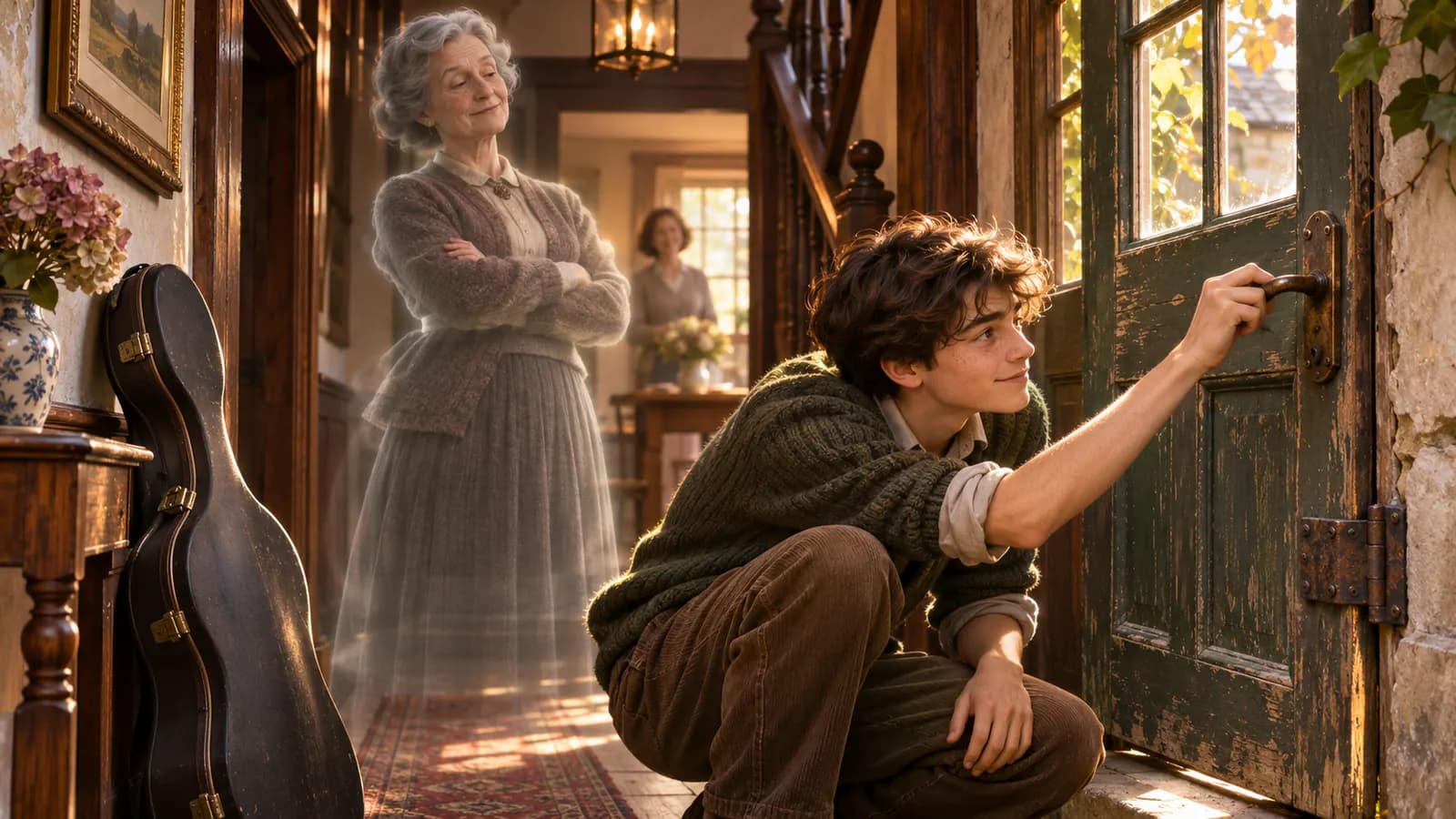
The ghost at Number Nine waited until the prospective tenant praised the natural light before dropping the chandelier.
It stopped six inches above his head.
“Original fitting,” said Imogen, the letting agent.
The man left without collecting his umbrella.
Imogen closed the front door and looked up the staircase.
“That was the fourth.”
A pale woman appeared on the landing, wearing a wool skirt and an expression Imogen recognised from difficult property owners.
“He was going to paint the banister white.”
“He was going to pay six months in advance.”
“So was the previous man.”
“The previous man wanted to photograph his furniture here.”
“He called the fireplace a content opportunity.”
Imogen put down her folder. The owner had given her until Friday to find a tenant. After that, he intended to sell the house empty, at whatever price somebody would pay.
“Mrs Fenwick, what exactly do you want?”
The ghost considered this.
“Someone who closes doors properly.”
That afternoon, a woman arrived with a teenage boy and a cello case. Her name was Ruth. She worked at the hospital and had apologised twice by the time they reached the kitchen.
“We can afford the advertised rent,” she said. “But not an increase.”
“No increase,” Imogen said.
From upstairs came three slow, heavy footsteps.
Ruth glanced at the ceiling.
“Neighbours?”
“Not exactly.”
The boy, Kit, had opened the back door. It scraped across the tiles.
“That hinge has dropped,” he said.
Mrs Fenwick materialised beside the sink.
Ruth dropped her keys.
Kit looked from the ghost to Imogen.
“Is she included?”
“I lived here,” Mrs Fenwick said.
“Right.” He closed the door carefully, lifting it by the handle.
For several seconds, nobody spoke.
Then Ruth asked whether the washing machine worked.
They stayed forty minutes. Ruth measured the narrow room beside the kitchen. Kit checked that his music stand would fit beneath the window.
Mrs Fenwick followed them without dropping anything.
When they left, Imogen gathered her papers.
“They seem suitable.”
“He’ll practise that instrument.”
“Yes.”
“Every day?”
“Probably.”
“And she works nights. She’ll sleep during the morning.”
“People do occasionally sleep in houses.”
Mrs Fenwick vanished.
At eleven the following day, Imogen returned to find every door in the house open. Cupboards, wardrobes, even the little hatch beneath the stairs.
Mrs Fenwick stood in the hall.
“I cannot be silent all morning.”
Imogen sat on the bottom step.
“Then tell her that.”
Ruth came back after her shift. She listened while Mrs Fenwick described the footsteps, the occasional knocking and a problem with appearing unexpectedly in mirrors.
Ruth rubbed her eyes.
“Could you manage quiet until twelve?”
“Eleven.”
“Half past.”
Mrs Fenwick nodded.
“And no mirrors in the bathroom,” Ruth added.
That took longer.
They signed the lease on Friday.
On moving day, Kit propped open the back door to carry in his cello. Then he went back for a screwdriver.
Upstairs, Ruth attached a small handwritten sign to her bedroom door: SLEEPING UNTIL 11:30.
By evening, another sign had appeared on the attic door.
Imogen read it while returning the spare keys.
RESTING. PLEASE KNOCK.
From behind it came a voice.
“And wait for an answer.”
Behind the story — editorial note
The awkward viewing turns into a negotiation about living together. The cover is an AI-generated illustration, not a photograph of a real house or person.
My favourites (0)
Saved in this browser only. Clearing browser data removes them.
No favourites yet. Open a story and save it here.